
Why it took me more than twenty years in the event industry to realize it was never really about events?
For years, I thought I was in the event business.
Concepts.
Production.
Budgets.
Timelines.
That was my world.
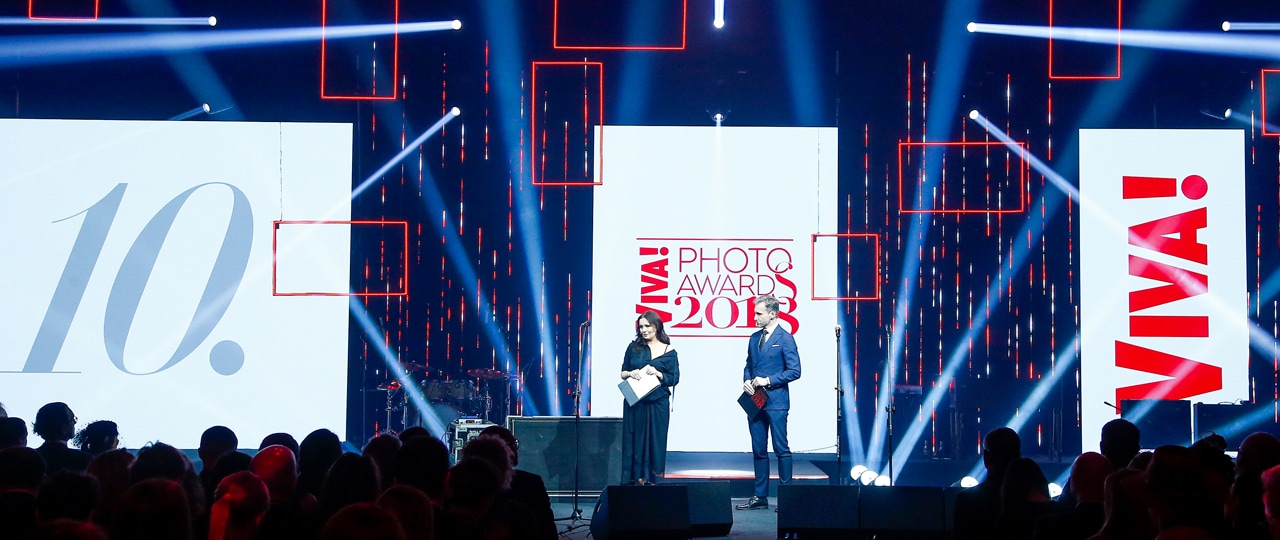
For nearly a decade, I co-created an international photography competition for emerging talent. Every edition took months of preparation—from building partnerships and selecting an international jury to producing exhibitions and the final awards gala.
Along the way, I had the privilege of working with some of the world’s most respected photographers and artists, including Ryszard Horowitz, Chris Niedenthal, Alexi Lubomirski, and Sandro Miller.
From the outside, it looked like another successful event.
Today, I realize I was building something else entirely.
Years later, I don’t remember the stage design.
I don’t remember the agenda. I don’t remember who spoke first.
What I remember are the people. The conversations.
The unexpected moments that were never part of the schedule.
A few years ago, while searching for an exhibition for the next edition of the competition, I visited the Leica Gallery.
On the walls hung Sandro Miller’s iconic series “Malkovich, Malkovich, Malkovich.”
After his artist talk, I asked the gallery owner whether I could have just a few minutes with Sandro.
The answer was simple. He didn’t have time. His entire day was filled with interviews.
But somehow, the following morning, we managed to meet. I came with one idea.
To invite him to join the competition jury and explore the possibility of creating a unique photographic project for our publishing brand.
One conversation led to another.
One idea sparked the next.
At one point, someone mentioned Pope John Paul II. Later, Frédéric Chopin.
More than a year later, those ideas became a remarkable photo project featuring John Malkovich, inspired by two of Poland’s greatest cultural icons.
Looking back, it still feels almost impossible. And yet, it happened.
Not because everything had been carefully planned. Not because the project timeline was perfect.
It happened because two people sat down and had a conversation.
Because curiosity opened a door. And because someone had the courage to say:
“I have an idea.”
A few years later, I found myself asking a different question.
What do people actually take home after an event is over?
The agenda? The keynote presentations? The photos? Or something else entirely?
Maybe it’s a single conversation that changes the direction of a career.
A new perspective that shifts the way someone thinks.
Or the moment two strangers meet and decide to build something together.
The more I reflected on it, the more I realized that we’ve been measuring the success of events in the wrong way.
Ironically, the answer didn’t come from the event industry.
It came from one of the longest-running studies on human wellbeing ever conducted.
For more than eighty-five years, the Harvard Study of Adult Development has explored what truly contributes to a long, healthy and fulfilling life.
Its conclusion is surprisingly simple. Not wealth. Not professional success. Not status.
Relationships.
The people we surround ourselves with have a greater impact on our happiness, health and longevity than almost anything else.
Robert Waldinger, the current director of the study, summarized decades of research in one sentence:
“Good relationships keep us happier and healthier. Period.”
That sentence stayed with me.
Because it made me realize something I hadn’t fully understood before.
Perhaps the most valuable resource of the twenty-first century isn’t information anymore.
It’s human connection.
And that’s the paradox of our time. We’ve never been more connected.
We work remotely. We collaborate across continents. We communicate instantly.
Artificial intelligence answers our questions in seconds.
Yet at the same time, loneliness has become one of the defining challenges of modern society.
Not because people are physically isolated.
But because being connected isn’t the same as feeling connected.
In 2023, the U.S. Surgeon General described loneliness as one of the most significant public health challenges of our time, comparing its impact on health to smoking around fifteen cigarettes a day.
It’s a striking comparison. But perhaps an even more important question is:
What can we do about it?
Some time ago, I came across a thought that has stayed with me ever since:
We naturally tend to stay inside our own bubbles—our familiar interests, opinions and routines. Yet it is only by opening ourselves to different people and different perspectives that we discover the richness of the world around us.
Looking back, that’s exactly what happened in the Leica Gallery.
If I hadn’t walked into that exhibition…
If I hadn’t stayed after the talk…
If I hadn’t asked for a conversation…
If I hadn’t shared my idea out loud…
None of that story would have happened.
Today, I believe a little less in coincidence.
And a lot more in intentionally creating opportunities for meaningful encounters.
The longer I worked in the industry, the more one question kept coming back.
Are we measuring success in the right way?
For years, we’ve been taught to focus on numbers.
Attendance. Ticket sales. Media coverage. Social media reach. Engagement metrics.
Those numbers matter. But do they really tell us whether an event made a difference?
Maybe we’re asking the wrong question. Instead of asking,
“How many people attended?”
perhaps we should ask,
“How many meaningful connections were created?”
How many people left with a new perspective?
How many collaborations began because two people happened to meet?
How many ideas continued to grow long after everyone had gone home?
Because if nothing changes after an event is over, can we really call it impactful?
For more than two decades, the idea of the Experience Economy has been reshaping the way organizations think about value.
Joseph Pine and James Gilmore argued that people no longer buy products or services alone.
They buy experiences.
They buy emotions.
They buy stories.
They buy memories.
Today, that idea feels more relevant than ever. But I believe the conversation has evolved.
The most valuable experience isn’t the one that simply creates an emotional moment.
It’s the one that creates a lasting relationship. Because that’s where real value begins.
The true value of an experience isn’t measured by what people remember.
It’s measured by what changes because of it.
Sustainability doesn’t begin with materials.
It begins with meaning.
When we talk about sustainability, we usually think about recycled materials, reducing plastic, or lowering carbon emissions. Those things matter. But responsible design starts much earlier.
It starts with a simple question:
Should this event exist in the first place?
Does it create value for the city?
Does it strengthen the local community?
Does it encourage collaboration?
Will people still talk about it months—or even years—after it’s over?
The most sustainable projects aren’t necessarily the ones with the smallest environmental footprint.
They’re the ones whose impact continues long after the lights go out.
People may forget the stage design. They may forget the presentations.
But they rarely forget a conversation that changed the way they think.
Or a person they would never have met otherwise. Because that’s what stays with us.
Not the event itself.
But what happened between people. Today, I think about my work very differently.
When I started building NTHY, I realized that I was no longer interested in organizing events.
Today, I’m fascinated by something entirely different:
Creating spaces where conversations become ideas…
Ideas become collaborations…
And collaborations become lasting relationships.
Because the event itself has never been the goal. It’s what happens afterwards that matters.
When communication becomes understanding.
When creativity meets culture.
When stories bring people together.
When international collaborations begin with a single conversation.
That’s where real impact begins.
Perhaps that will become the greatest luxury of the years ahead. Not unlimited access to information. Not another breakthrough technology. Not even artificial intelligence.
But the opportunity to sit around one table with people an algorithm would never have introduced us to.
To listen. To exchange ideas. To challenge one another.
To build something together. Because innovation never starts with technology.
It starts with people.
There is one thought that has stayed with me throughout my career.
The future is the natural consequence of what we choose to create today.
Maybe that’s also true for the way we bring people together.
Because the future won’t belong to those who organize the biggest events.
The future belongs to those who create experiences.
Experiences that build trust. Experiences that connect people.
Experiences that inspire action. And experiences that continue to shape lives long after the lights have gone out.
In the end, we rarely remember the agenda.
We remember a person. A conversation. An unexpected encounter.
A single moment that changed the way we think.
That’s why, today, I believe more than ever:
The future doesn’t belong to events.
It belongs to experiences.
Agnes Krzemińska-Knap
Founder | NTHY – Creative Agency Hub
We don’t just organize events.
We build stories people remember.